


Why Boat Deck Mats Lift and Fade?
From fracture surfaces and surface energy to heat creep and UV aging, this guide turns vague quality complaints into testable, attributable, and preventable engineering problems.
A Problem Misdiagnosed for a Decade
Most EVA boat deck mat warranty claims come down to two statements: “it will not stay down” and “it changed color.” The industry's reflex is to blame the adhesive or the foam, so the remedy becomes changing the glue, the compound, or the supplier. Yet the same problem often returns.
Lifting and fading are multi-factor system failures, not single-material defects.
Replacing one variable may disturb the balance and move the problem into a different form. A reliable investigation follows a defined sequence: failure mode, mechanism, measurable metric, prevention, and liability determination.
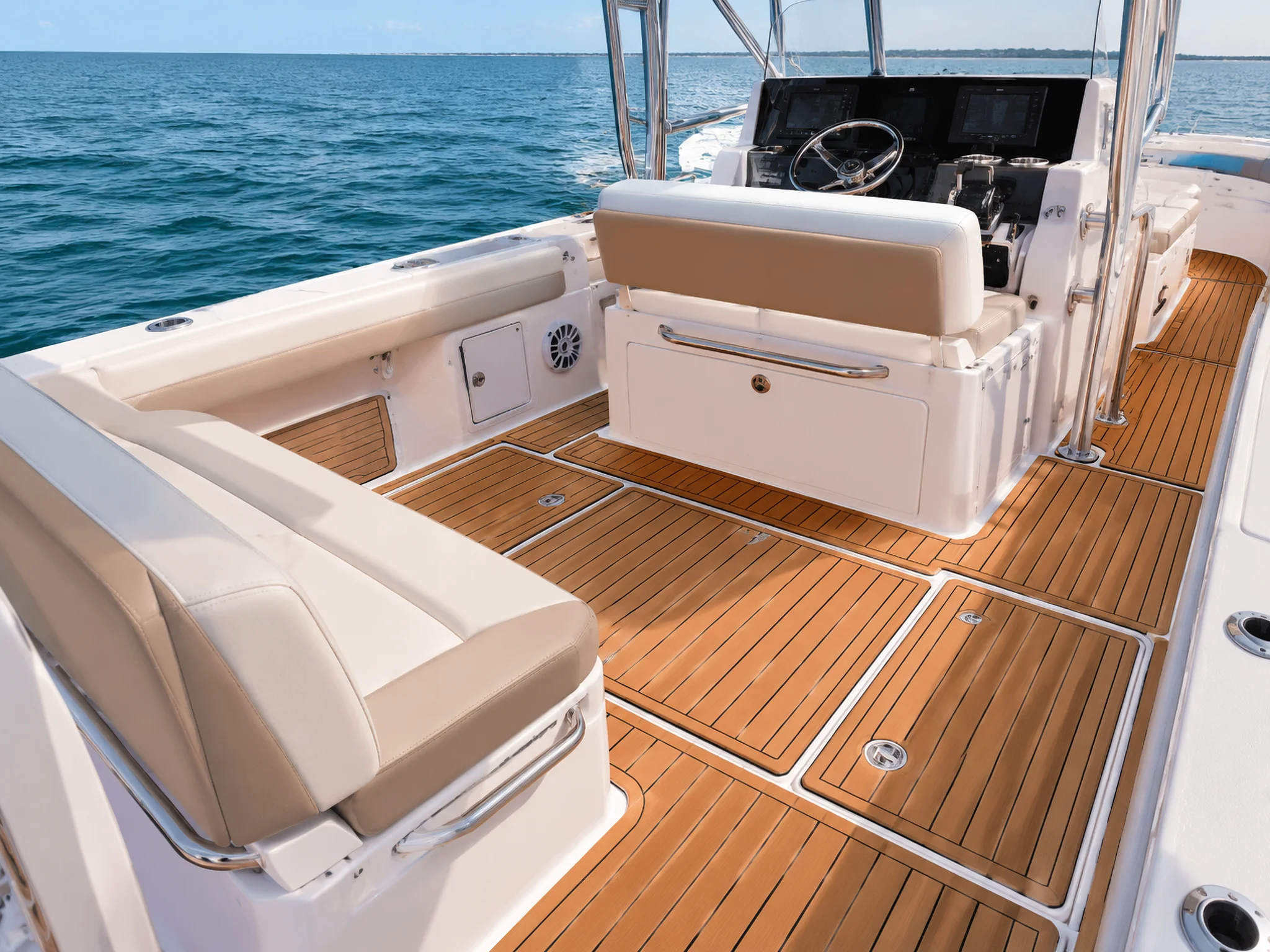
1. Identify the Three Fracture Modes First
Open a lifted area and inspect the fracture surface. Most failures fall into one of three categories. Getting this classification right determines where the investigation should go next.
| Fracture mode | Surface appearance | What it proves | Primary investigation |
|---|---|---|---|
| Adhesive / interfacial | Clean surface; adhesive remains almost entirely on one side | No effective bond formed at one interface | Surface treatment, contamination, adhesive selection |
| Cohesive | Rough surface; cells torn open; foam residue on both sides | Bond strength exceeds the material's internal strength | Edge stress, thermal arching, curve rebound |
| Substrate | Gelcoat, paint, or non-skid coating pulls away with the mat | Bond strength exceeds the substrate surface strength | Pre-installation substrate assessment |
The industry's most common wrong conclusion
Cohesive failure does not prove that the adhesive is weak. It often proves that the adhesive held. The actual driver may be edge stress concentration, thermal arching, or rebound on a compound curve. A stronger adhesive may simply pull the substrate coating away.
2. Why the Interface Fails
Surface energy is the first overlooked variable
EVA has relatively low surface energy, while a pressure-sensitive adhesive needs adequate wet-out to form a stable bond. Corona, flame, plasma, and primer treatments can improve bonding, but the effect is time-sensitive: leave a treated sheet too long before lamination and the benefit decays.
| Method | Effect | Treatment life | Main risk |
|---|---|---|---|
| Corona | Significant and controllable | Laminate promptly; treatment decays | Over-treatment can degrade the surface |
| Flame | Clearly effective | Short-lived; operator dependent | Scorching and color shift |
| Plasma | Uniform and highly effective | Best used in-line | Higher equipment cost |
| Primer | Moderate improvement and coupling | Longer than physical treatment | Manual coating variation |
Contamination is invisible but decisive
Low-cost verification
Use a dyne pen or contact-angle test to turn “the surface was treated” into a recorded, auditable process value.
3. Environmental and Structural Stress
Even a well-prepared interface can fail when environmental and structural loads are ignored. These problems must be solved in design and installation, not only by selecting a tackier adhesive.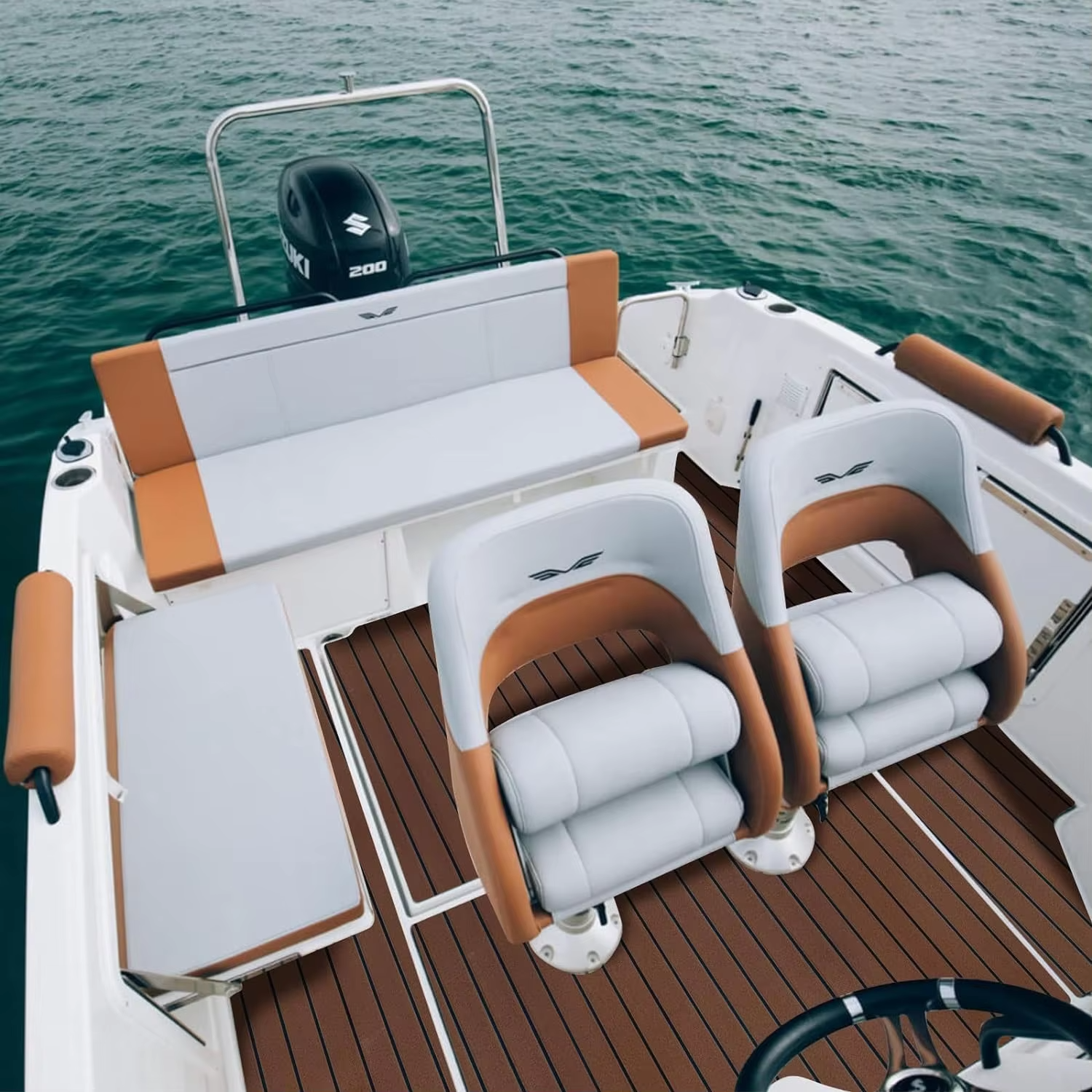
Design before adhesive
Use appropriate expansion gaps, chamfer or seal edges, panelize curved areas, and specify a higher-temperature adhesive system for dark colors and hot climates.
Turn “it sticks” into measurable data
| Test | Typical condition | What matters |
|---|---|---|
| Ambient peel | 180° or appropriate fixture | A baseline only, not a complete release criterion |
| Peel after aging | 72 h at 60°C, or the approved company standard | Strength retention and decay trend |
| High-temperature shear | Dead load at controlled temperature | Predicts creep under sustained heat |
| Thermal-humidity cycling | Repeated high/low cycles | Edge lift, bubbles, and dimensional change |
| Peel after immersion | Test after controlled water exposure | Bond retention after moisture ingress |
Buyer takeaway: ask for aged data, not only room-temperature initial tack. A supplier that can produce controlled aging and retention results offers more useful evidence than one that can only send a good-looking sample.
4. Five Conditions Commonly Called “Fading”
| Appearance | Likely mechanism | Recommended check |
|---|---|---|
| Lighter or whitened color | Pigment photodegradation or surface chalking | Clean first, then measure ΔE and gloss retention |
| Overall gray or hazy finish | Additive migration attracting dust | Compare before and after mild cleaning |
| Localized yellowing | Antioxidant depletion and oxidation | Compare retained and aged samples |
| Spots or mildew | Microbial growth in humid conditions | Cleaning and surface inspection |
| White edges or corners | Stress whitening from cell deformation | Inspect cutouts and high-strain areas |
Misclassification is expensive. Treat graying as pigment fade and a factory may change the compound while the product still turns gray. Treat stress whitening as UV failure and the root cause will never be found. The correct sequence is cleaning comparison, color measurement, and then surface or cross-section analysis.
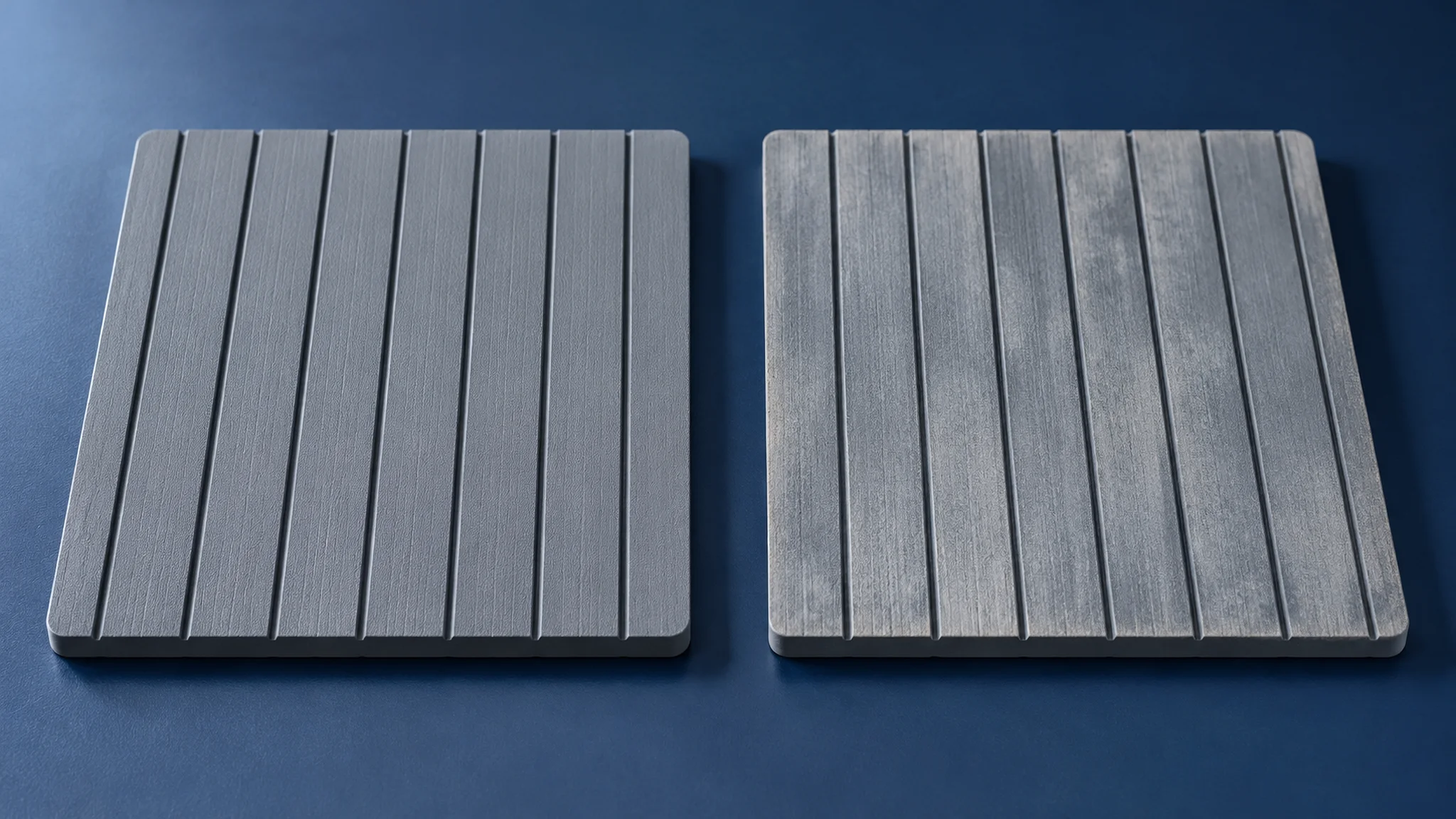
Why black and saturated colors fail first
- Black and dark gray absorb more energy and run hotter, accelerating photo-oxidation, thermal aging, and adhesive softening.
- Red, yellow, and orange often depend more heavily on pigment lightfastness and stabilization.
- Light gray and beige can retain color well but show dirt more readily, moving complaints from “faded” to “dirty.”
A UV system is more than one additive
| Tier | System | General performance position | Typical application |
|---|---|---|---|
| Basic | Single UV absorber | Short-term protection | Price-led volume products |
| Standard | UV absorber + antioxidant | Mainstream weathering resistance | General aftermarket |
| Reinforced | UV absorber + antioxidant + HALS + controlled surface | Longer-life system | OEM and premium programs |
Absorbers reduce incoming energy, antioxidants slow oxidation, and HALS scavenges radicals created by photo-oxidation. They are complementary rather than interchangeable. Any “non-fading” claim should state the test method, duration, exposure conditions, and measured color difference.
Verification methods
| Method | Acceleration | Useful metrics | Limitation |
|---|---|---|---|
| QUV (UVA-340) | High | ΔE, gloss retention, surface change | Not a full solar spectrum |
| Xenon arc | Medium | ΔE and visual rating | Closer to reality but more costly |
| Outdoor exposure | 1× | Most realistic field behavior | Requires long test periods |
5. Control the Entire Chain
Formulation and materials
- Design a separate stabilization package for dark colors rather than sharing one formulation across the range.
- Evaluate filler ratio together with UV performance; high filler can accelerate surface chalking.
- Maintain approved color standards and retained batch samples with defined color-difference limits.
Lamination and machining
- Put treatment method, minimum dyne level, and permitted dwell time on the process card.
- Make de-dusting and mold-release removal a dedicated station, not an incidental step.
- Validate primer and application temperature for cold lamination; protect cut edges from water ingress.
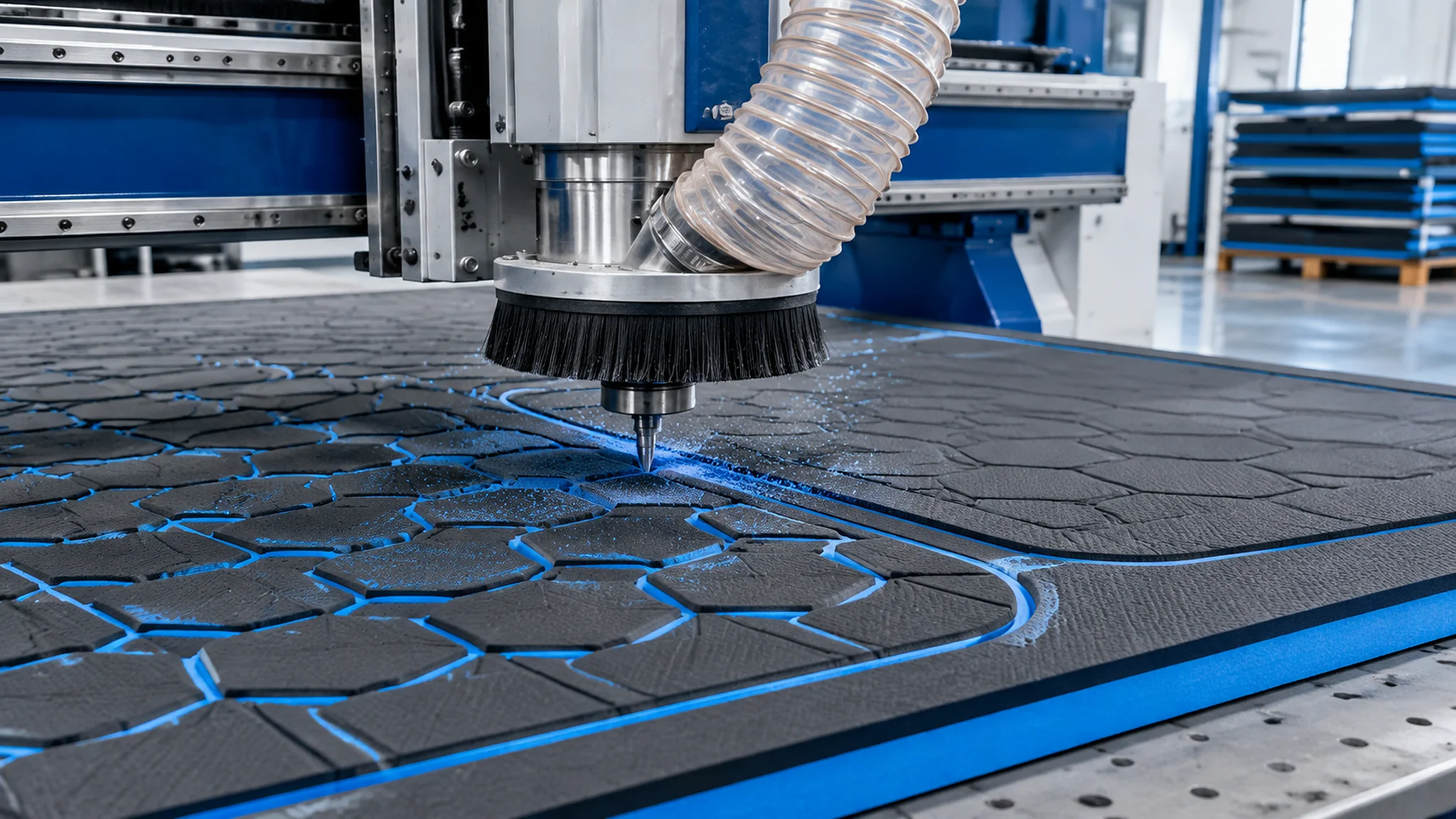
Structural design
- Assess expansion gaps when panels become large or service temperatures are severe.
- Radius corners and cutouts to reduce stress concentration.
- Panelize curved areas instead of forcing one large sheet to conform.
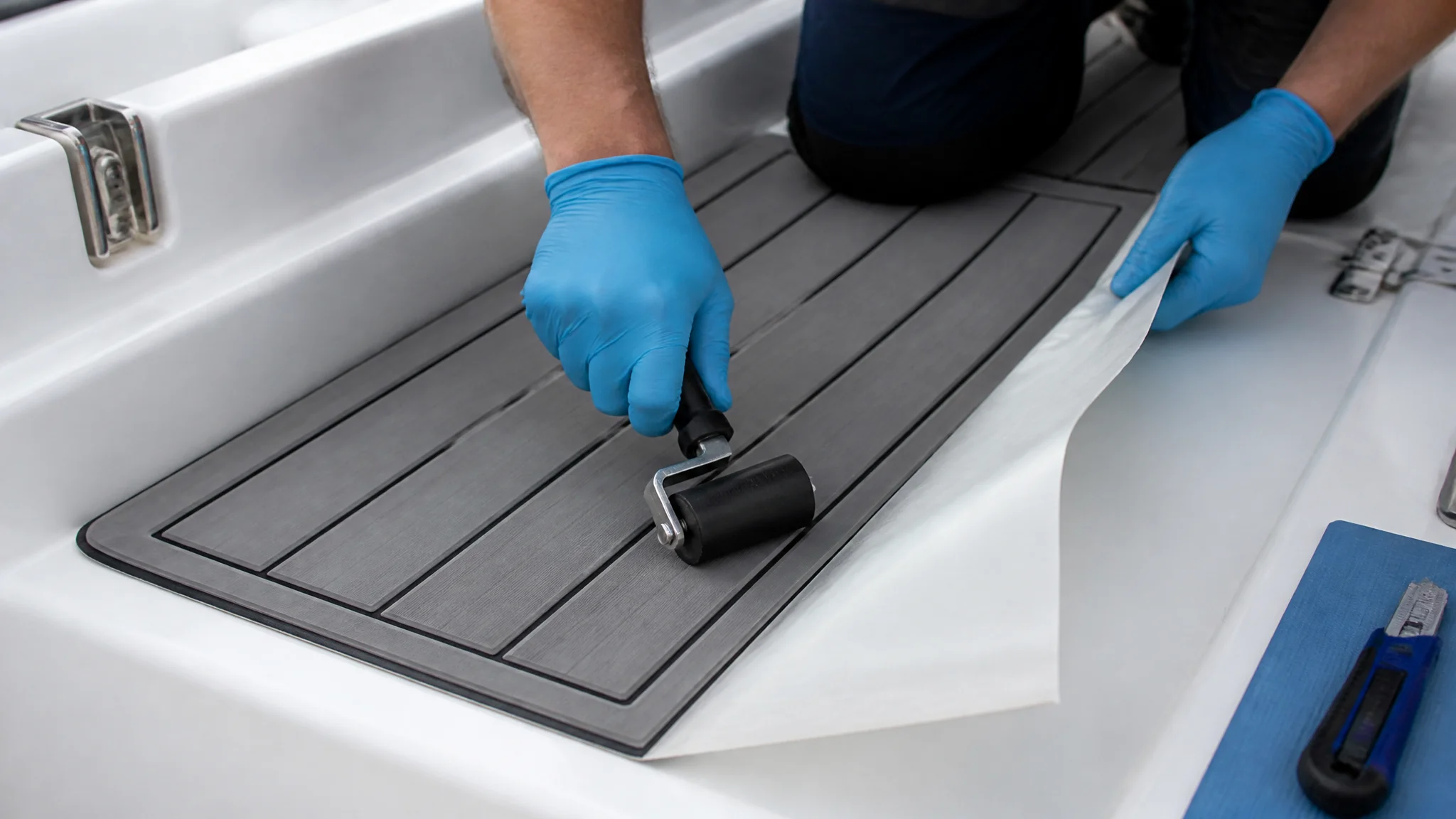
Five-step installation control
6. A Workable Liability Workflow

Translate “good quality” into verifiable language
Replace initial tack with aged strength retention. Replace “non-fading” with ΔE, exposure time, and test method. Replace “experienced installers know how” with documented treatment, gap, rolling, and cure controls.
The most expensive sentence in this industry is “our adhesive is good; it will not lift.” It gives the buyer nothing measurable. A test report that can be reviewed is worth more than a promise that cannot be verified.
Practical Answers for Buyers and Installers
Why does my boat deck mat only lift in summer?
Elevated-temperature PSA creep combines with differential thermal expansion between EVA and the substrate. Review the adhesive temperature grade, panel size, edge design, and expansion gaps.
One edge has lifted. Can I glue it back down with silicone?
Silicone is not recommended. Silicone oil can migrate and contaminate the interface, making later bonding more difficult. Use an approved same-system repair or replace the damaged component.
Is graying the same as fading?
Not always. Run a mild cleaning comparison first. If the appearance recovers, the issue may be dust attracted by additive migration. If the color difference remains after cleaning, investigate photodegradation.
Is black EVA decking more durable than gray?
Not automatically. Black absorbs more heat and usually places greater demands on both the UV stabilization package and the adhesive's temperature resistance.
How can I screen a supplier's adhesive performance quickly?
Ask for controlled peel-after-aging, peel-after-immersion, and high-temperature shear data. Verify the test conditions and strength-retention results rather than relying on initial tack alone.
